Political scientist Albina Fetahaj on her first book “Border Colonialism”
‘Borders are not natural phenomena, but political choices’
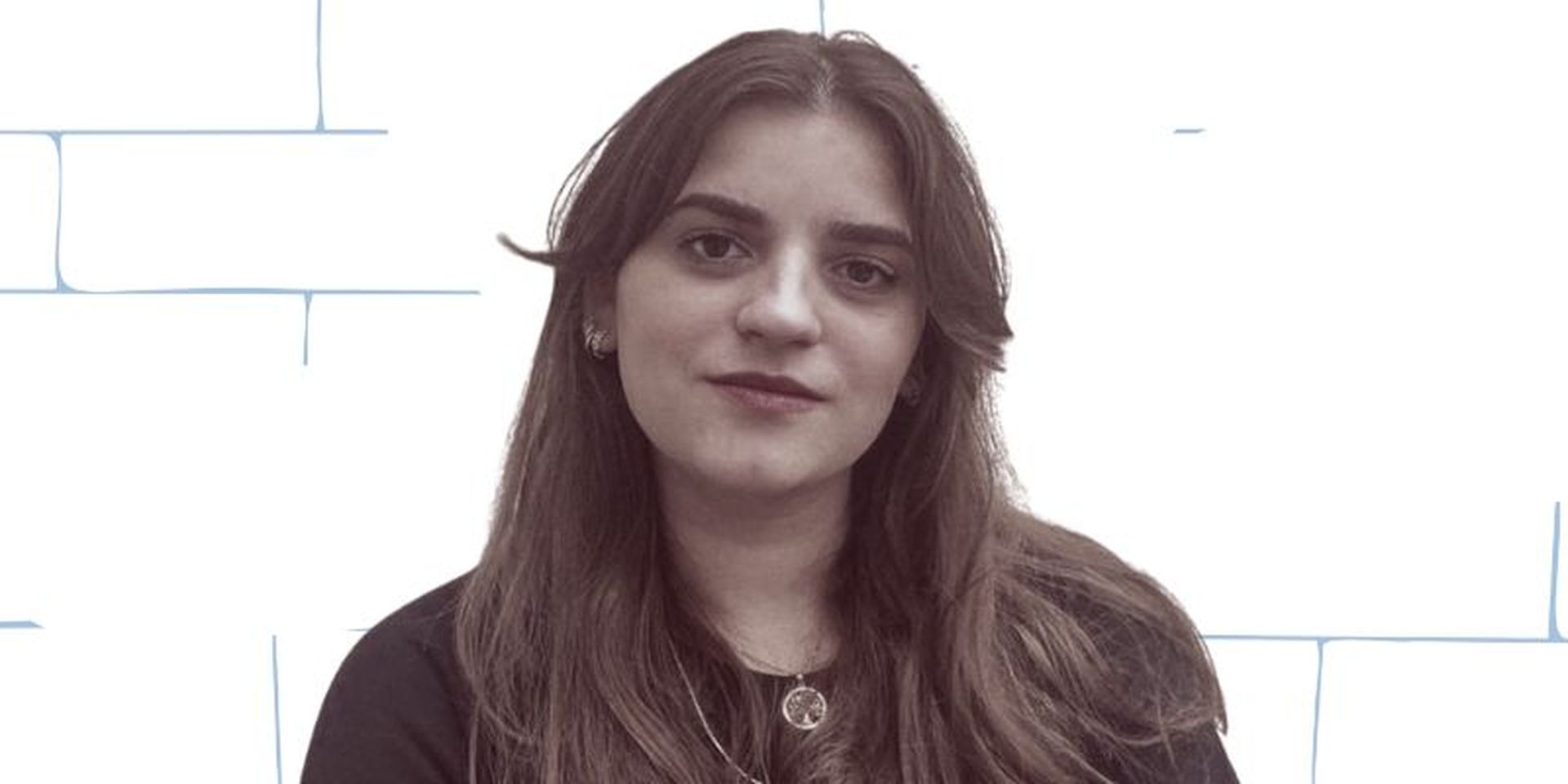
15 April 2026 • 11 minutes reading time
According to political scientist and writer Albina Fetahaj (26), Europe lacks a fundamental reflection on what borders are and what structures protect them. She calls this lack of historical and political understanding one of the most persistent blind spots of our time. Her first book Border Colonialism is an invitation to dare to imagine a different world.
This article was translated from Dutch by kompreno, which provides high-quality, distraction-free journalism in five languages. Partner of the European Press Prize, kompreno curates top stories from 30+ sources across 15 European countries. Join here to support independent journalism.
Because of her Kosovan roots, Albina Fetahaj grew up with the realisation that documents and passports determine who gets access and who gets excluded. ‘You begin to think that you are the problem,’ she says. ‘That you constantly have to prove that you are allowed to be here.’
Dissecting that logic and revealing the structures behind it creates space to look at themselves and the world differently. ‘When you understand how structures work, you can shake off any guilt or shame you feel. That is liberating.’
Albina Fetahaj exudes a calm determination. She is young, driven and speaks with striking clarity about justice and inequality. When we meet in a coffee shop in Brussels, it is immediately striking how precisely and thoughtfully she chooses her words.
Although still a student, she made an immediate impression with her first master’s thesis: it grew into her first book publication. She thus graduated in the master’s programme Conflict and Development at Ugent, and is now adding a master’s programme Gender and Diversity.
From her research, she learned that borders not only reflect inequality, but also create it. Some movements are celebrated, others criminalised. ‘Why is someone called an expat and someone else an immigrant?’ she asks. ‘That difference is not a coincidence, but a continuation of a colonial logic that is still palpable today.’
With her book Border Colonialism, Albina Fetahaj joins a decolonial movement that refuses to believe that the current border order is the end point. The book is not a policy prescription, but an invitation to open up the debate. ‘Every political change starts with the question no one dares to ask: what if things could be different?’
Your book resulted from a thesis research on the concept of borders. Why did you feel there was a need for a book to also reach a wider audience?
Albina Fetahaj: ‘I noticed that many people have a blind spot around migration and especially around the obviousness of borders. We are constantly discussing how much migration we want, stricter or milder measures, but almost never the function and origin of borders.’
‘It is taken for granted that borders are necessary and that it is normal for mobility to be unevenly distributed. I wanted to break that self-evidence.’
When did you start questioning that self-evidence?
Albina Fetahaj: ‘I was six when my family got Belgian papers. Suddenly we could travel to Kosovo and see our family again, something that seemed impossible until then. But they couldn’t come here. That felt so unfair. Why are some people allowed into the world and others are not?’
‘Every year I was confronted with the same inequality. It became the beginning of a search for the reasons behind that inequality, not only what it does to people but especially why it exists at all.’
‘Migration is not a natural phenomenon that takes us by surprise, but a consequence of structures that Europe itself has built.’
The phrasing “people rendered migrants” appears repeatedly in your book. Why is it important?
Albina Fetahaj: Because words are never neutral. No one is born a migrant. “Migrant” is not an identity, but a label imposed by systems in order to classify people.
Just as the shift from the word “slave” to “enslaved people” makes clear that slavery was not a natural condition but an imposed system, the term “people made into migrants” reveals that migration is not an inherent category, but the result of structures that produce exclusion. Language shapes how we understand the world, and without new words, a different world remains unthinkable.
How do you explain that many people nevertheless continue to experience this inequality as normal and self-evident?
Albina Fetahaj: That has to do with the stories we have come to believe about borders. Borders are presented as something natural and necessary for security and order. As a result, people hardly reflect anymore on their origins or their function.
But borders are the result of political choices and economic interests. When something is constantly repeated as normal, it comes to feel self-evident, even if it is fundamentally unequal and artificial.
Colonialism lives on
In your book, you explicitly link migration and borders to colonialism and capitalism. Why are these connections, in your view, essential?
Albina Fetahaj: Because the current border and migration regime did not emerge out of nowhere. It is built on colonial hierarchies that determined who was allowed to move freely and who was subjected to control.
Within capitalism, borders sustain inequality: they make migrant workers vulnerable and therefore easily exploitable. Without naming these historical and economic structures, we simply cannot understand migration today.
How exactly does that work?
Albina Fetahaj: ‘Capital is allowed to circulate freely. Companies can move to low-wage countries without restrictions, but workers cannot move freely to seek better wages. So they are stuck in conditions where they have no real freedom of choice and are forced to work in sweatshops or mines. This is no accident, but a continuation of the colonial economic system in which the Global North accumulates wealth through systematic exploitation of the Global South.’
You also link migration, colonialism and the so-called green transition.
Albina Fetahaj: ‘Yes. Take Congo, for example. Raw materials like coltan, cobalt and copper, which are essential for our smartphones, laptops and battery technology, are mined there under degrading conditions. The West’s so-called green transition is paid for with the depletion of bodies elsewhere.’
‘As long as the North’s overdevelopment remains dependent on the South’s underdevelopment, people will continue to migrate. Borders do not stop that. They only make migration more dangerous and deadly.’
You are critical of leftist and progressive movements that, in your view, still continue to think within right-wing assumptions about migration.
Albina Fetahaj: ‘Many left and progressive movements start from the same assumption as the right: that migration is a problem that needs to be controlled. They use softer terms like "more humane solutions" or "more efficient border controls", but the racial logic remains the same. Instead of questioning the fundamentals of the system, they manage the existing inequality. This is not change, but a continuation of the same power structures.’
Displacement crisis
What exactly do you mean when you say that the so-called "migration crisis" is a constructed crisis?
Albina Fetahaj: ‘Crisis is not a neutral word, but a political strategy to create fear. Europe repeats that it is overwhelmed and a victim of something coming from outside.’
‘In reality, Europe bears historical responsibility. Wars, resource extraction, emptied economies and climate damage caused elsewhere are exactly the reasons why people flee today and they are directly linked to European interests.’
‘Migration is not a natural phenomenon that overwhelms us, but a consequence of structures that Europe itself has built. That’s why I rather speak of a displacement crisis.’
‘Language determines how we understand the world, and without new words, another world remains unthinkable.’
You say that border deaths are not a tragic consequence, but a political choice. On what do you base that analysis?
Albina Fetahaj: ‘On what policy actually does, not on what it says it wants to do. Europe deliberately closes safe routes and chooses to let people die. Look at the deals with Tunisia, the pushbacks at sea, the criminalisation of rescue operations, the expansion of Frontex and the persecution of activists. These are not incidents or human error, they are policy instruments.’
‘Europe knows that people will continue to migrate as long as they think their chances of survival are greater on the other side of the border. Deterrence only works when the price becomes unthinkably high. That is why borders are made deadlier. Not to stop migration, but to maintain the illusion that the system is in control.’
Not a utopia
Why do you think the belief that borders work is much more unrealistic than the idea of a world without borders?
Albina Fetahaj: ‘The real unrealistic and irrational belief is the idea that we can continue with the current policy of pushbacks, thousands of deaths in the Mediterranean and overcrowded deportation centres, all to protect our welfare. We have created this.’
‘And within this world, the most rational thing you can do is to keep dreaming of a world with less violence. I refuse to believe that this world, with wars, structural exploitation and border deaths, is the best possible thing we are capable of.’
How do you see this other world order emerging in concrete terms?
Albina Fetahaj: ‘Not from above. Power is not going to change this world voluntarily. Anti-colonial history teaches us that the world grows from below, in small movements, in collective imagination. We have become so individualised that we have almost forgotten the power of collectivity. Thinking together, mourning together, acting together is also power.’
‘You see that happening again now: occupations of universities, direct actions, new forms of organising together. Young people are no longer waiting for permission, they are already starting to build the other world. Power’s response is more and more repression, precisely because it feels it is losing its grip.’
Are you hopeful about that future?
Albina Fetahaj: ‘Above all, I feel urgency. When state violence becomes more and more entrenched and repressive, people have no choice but to rebel. We must not become desperate.’
‘Lola Olufemi writes: "The future is nobody’s property". The future has not yet been written and that is our responsibility. Whether that world will look better than today, we don’t know. But giving up is not an option.’
What do you hope your book will bring about?
Albina Fetahaj: ‘I hope it invites people to learn to imagine again and ask questions that power would rather not hear. That they understand that borders are not natural phenomena, but political choices that determine who gets to live and who gets to die. And that everyone has a position in this system and can help dismantle it.’
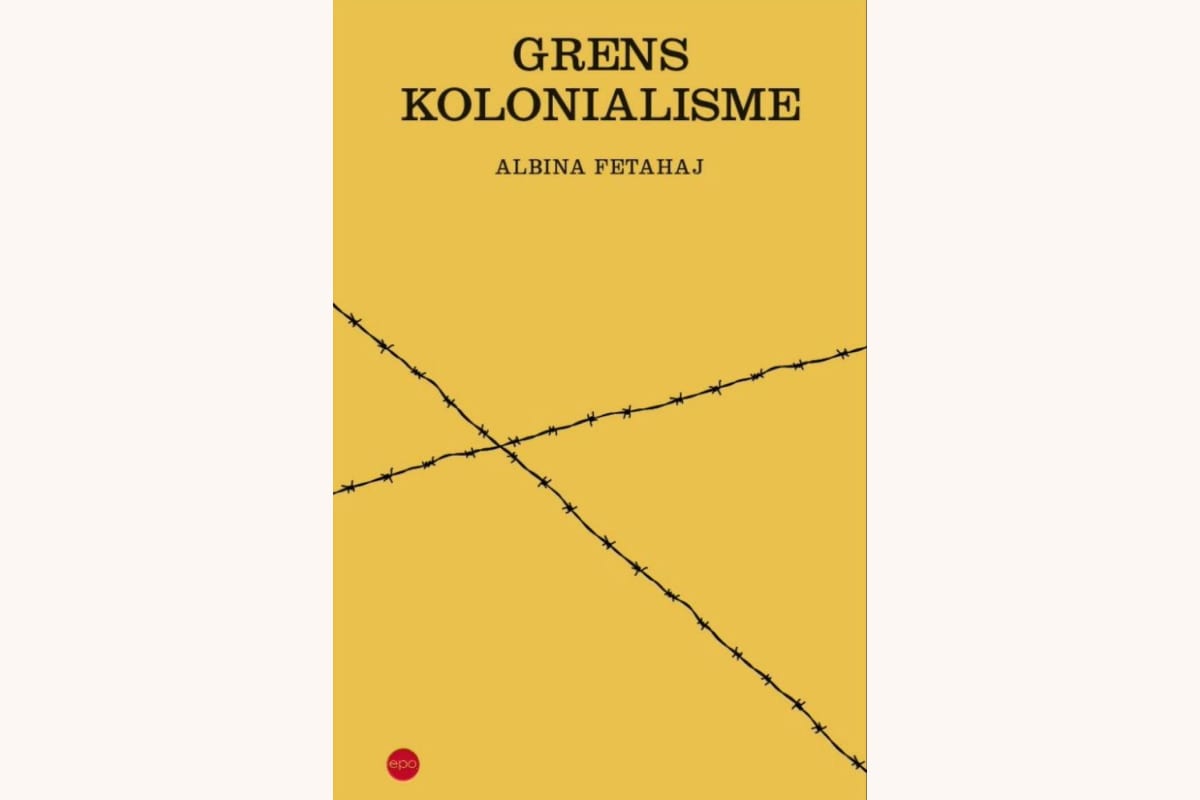
Border Colonialism (Grenskolonialisme) by Albina Fetahaj is published by EPO, 2024.
This article was produced with Special Project Support from 11.11.11
 This article was translated from Dutch by kompreno, which provides high-quality, distraction-free journalism in five languages. Partner of the European Press Prize, kompreno curates top stories from 30+ sources across 15 European countries. Join here to support independent journalism.
The translation is AI-assisted. The original article remains the final version. Despite our efforts to ensure accuracy, some nuances of the original text may not be fully reproduced.
Ontvang het beste van MO* rechtstreeks in je mailbox
Schrijf je nu in op onze gratis nieuwsbrieven en wij houden je op de hoogte van wat er gaande is in onze mondialiserende en snel veranderende wereld.
If you are proMO*...
Most of our work is published in Dutch, as a proMO* you will receive mainly Dutch content. That said we are constantly working to improve our translated work. You are always welcome to support us both as a proMO* or by supporting us with a donation. Want to know more? Contact us at promo@mo.be.
You help us grow and ensure that we can spread all our stories for free. You receive MO*Magazine and extra editions four times a year.
You are welcome at our events free of charge and have a chance to win free tickets for concerts, films, festivals and exhibitions.
You can enter into a dialogue with our journalists via a separate Facebook group.
Every month you receive a newsletter with a look behind the scenes.
You follow the authors and topics that interest you and you can keep the best articles for later.
Per month
€4,60
Pay monthly through domiciliation.
Meest gekozen
Per year
€60
Pay annually through domiciliation.
For a year
€65
Pay for one year.
Are you already proMO*
Then log in here